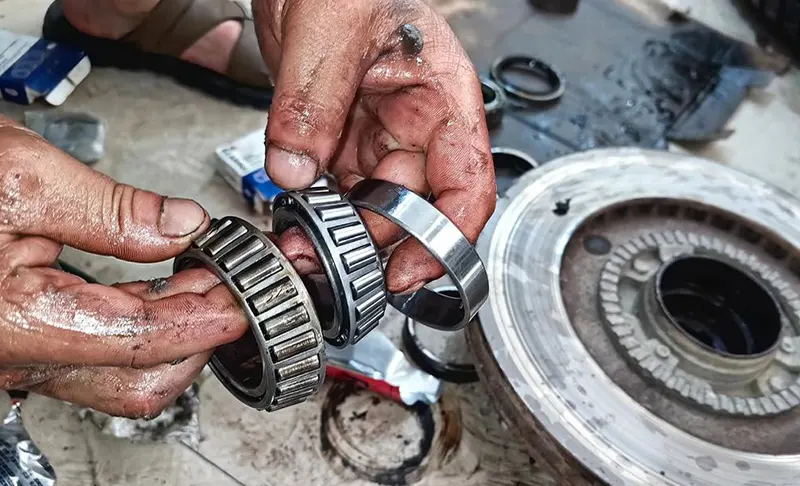
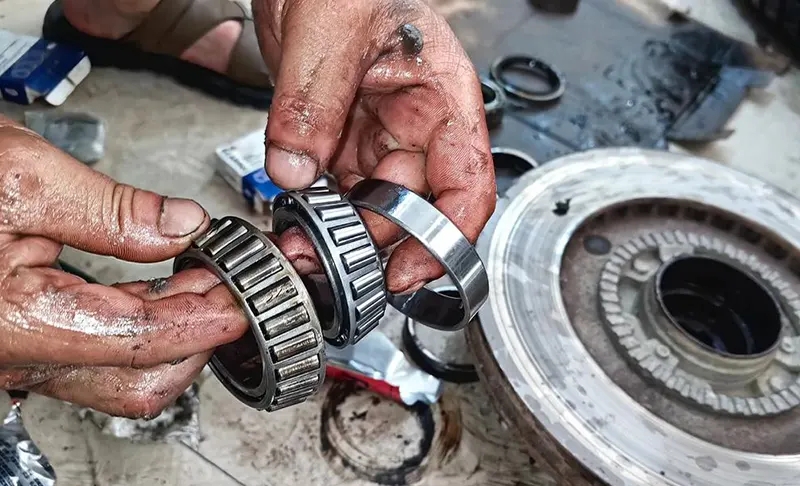
Tapered roller bearings, as key components designed to withstand combined radial and axial loads, are widely used in applications such as automotive wheel hubs, construction machinery gearboxes and machine tool spindles. The quality of their maintenance directly affects the service life and operational safety of the equipment. The following outlines the key technical points to be observed during the maintenance of tapered roller bearings.
I. Bearing Dismantling and Initial Inspection
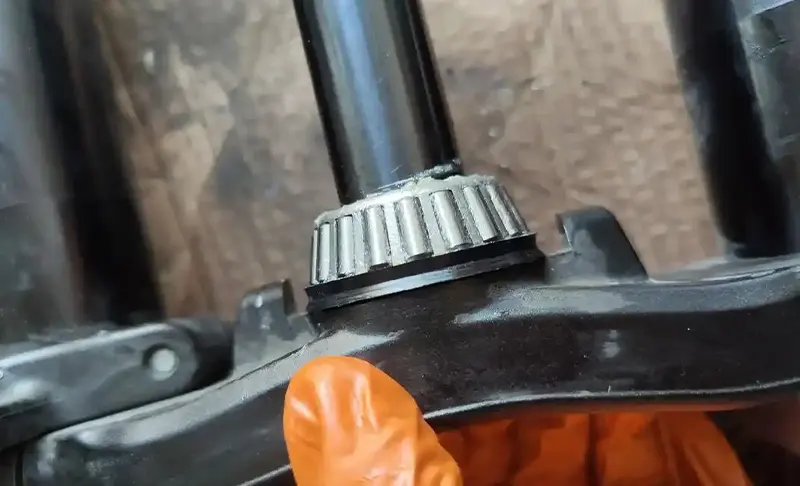
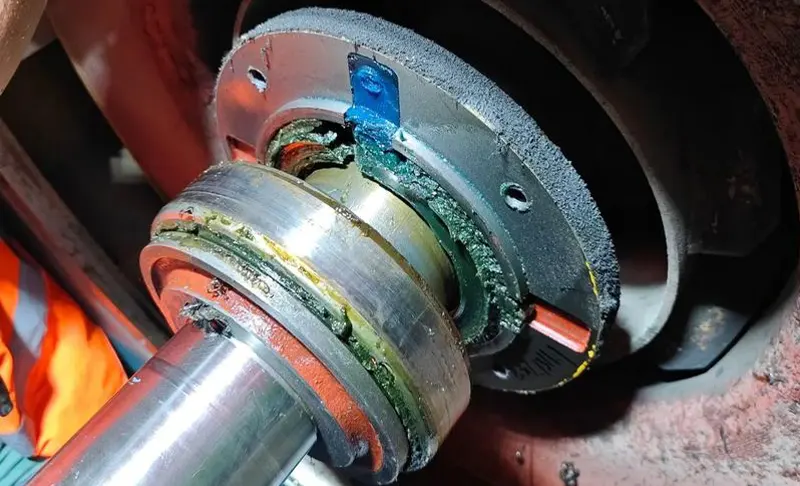
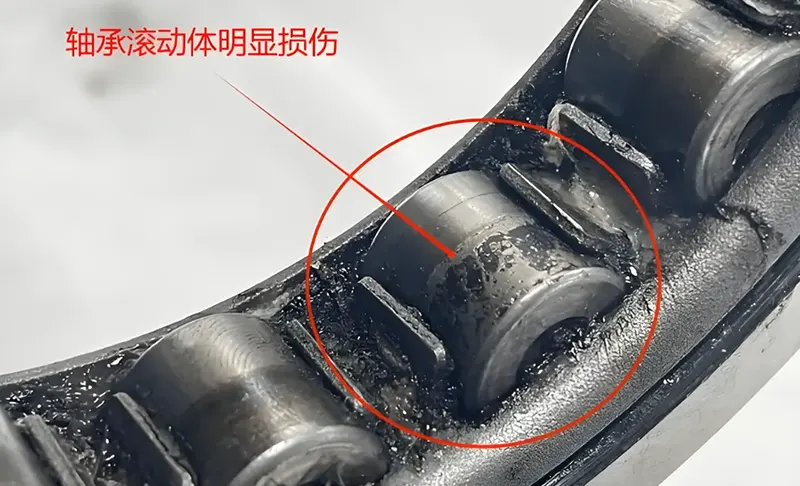
When dismantling tapered roller bearings, specialised extraction tools should be used to avoid striking the rollers or the cage, thereby preventing damage to the rolling elements and raceways. After dismantling, the bearing must be thoroughly cleaned to remove old grease and contaminants, followed by a visual inspection. Particular attention should be paid to the surfaces of the rollers, the raceways of the inner and outer rings, and the flanges to check for fatigue spalling, indentations, scorching or cracks. If the rollers show obvious spalling (as illustrated), this indicates that the bearing has suffered contact fatigue, and an assessment must be made as to whether it can be repaired or must be replaced.
II. Raceway Wear and Clearance Inspection
The axial clearance of a tapered roller bearing is a key indicator of its wear. Using a feeler gauge or a dedicated clearance measuring instrument, measure the axial clearance of the bearing whilst it is clean and dry, and compare the result with the standard range specified in the equipment technical manual. If the clearance exceeds the permissible upper limit, this indicates that the raceways or rollers have suffered severe wear, in which case the bearings must be replaced as a set. In the case of minor wear that can be rectified, the axial clearance can be restored by adjusting the thickness of shims; however, care must be taken to ensure that the bearing preload meets the design requirements after adjustment.
III. Assessment of Cage and Rolling Element Condition
The integrity of the cage is crucial to the operational reliability of the bearing. Inspect the cage for deformation, cracks or fractures, and check whether the wear of the pockets exceeds the permissible limits. If the cage is damaged, the rolling elements will lose their uniform spacing, leading to operational imbalance or even seizure. If there are minor scratches or rust spots on the surface of the rolling elements, polishing may be attempted as a repair; however, the amount of material removed must be strictly controlled so as not to alter the original dimensions and shape tolerances of the rolling elements.
IV. Key Controls During Assembly
When installing new or reconditioned bearings, strict control over cleanliness is required to prevent dust or metal debris from entering the bearing interior. When using a hot-fitting process, heat the bearing inner ring uniformly to 80–100 °C and use specialised press-fitting tools to install the bearing in position, ensuring that the bearing end face fits tightly against the shaft shoulder. Once installation is complete, set the preload in accordance with the equipment’s technical specifications and check by rotating the bearing to ensure it rotates freely without any binding.
V. Lubrication and Trial Run
Fill the bearing with grease that meets the operating conditions; the grease volume should typically be 30–50 per cent of the internal bearing space. During the trial run, operate the bearing at low speed under no-load conditions for at least 30 minutes, then gradually apply load up to the rated operating conditions whilst continuously monitoring bearing temperature and vibration. During normal operation, the temperature rise of the bearing should not exceed 40 °C above ambient temperature, and there should be no abnormal noise.
The maintenance of tapered roller bearings is a highly technical task; it is recommended that this be carried out by technically qualified personnel, strictly adhering to the maintenance manuals and technical specifications provided by the equipment manufacturer. A standardised maintenance procedure can effectively extend the bearing’s secondary service life and ensure the safe and stable operation of the equipment.